
Timeline of WTJU
May 1922 – The first thougths of WTJU emerge…
Since 1927, four University committees have studied the desirability and feasibility of setting up an educational FM station, but funds were never available. For instance, in 1940, plans were made for a state-wide system of nine such stations. These, of course, were never realized. The Federal Communications Commission (hereafter, FCC) had relaxed its rigid requirements concerning equipment, personnel, and engineering standards to encourage educational institutions in establishing “minor” educational FM stations of 10-watts or less in power.


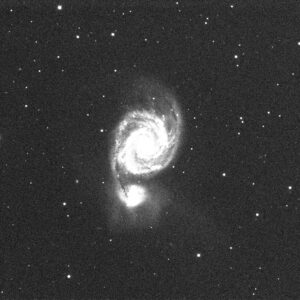
1927-1956 – The Primal Nebula
WUVA was established in 1947 (second in the area after WCHV) under the auspices of the Department of Speech and Drama (hereafter, DSD) as the University’s popular, carriercurrent, student-operated AM station. The DSD at this time occupied Madison Hall, WUV A’s studios being located in the basement. In 1949, Professor Russell H. Wagner and Assistant Professor George P. Wilson, Jr., as members of the University Radio Committee, submitted to President Darden the results of their study on the feasibility of the expenses involved in establishment of a cultural, educational, open-air, student-operated FM station (the last of the four studies mentioned above). Initially, it was to operate at 10 watts, but a power increase to 250 watts was anticipated. The studios were to be located adjacent to WUV A (though a later move to another building was planned) and its staff was to have access to WUV A’s reproduction equipment and the DSD’s recording facilities. The antenna and transmitter were to be located on and in either Madison Hall, the Rotunda, or Peabody Hall. The expenditure they recommended came to $11,041.50. A copy of this report is in the files.
1956-1957 – Genesis
Since 1927, four University committees have studied the desirability and feasibility of setting up an educational FM station, but funds were never available. For instance, in 1940, plans were made for a state-wide system of nine such stations. These, of course, were never realized. The Federal Communications Commission (hereafter, FCC) had relaxed its rigid requirements concerning equipment, personnel, and engineering standards to encourage educational institutions in establishing “minor” educational FM stations of 10-watts or less in power.
May 1922 – The first thougths of WTJU emerge…
Since 1927, four University committees have studied the desirability and feasibility of setting up an educational FM station, but funds were never available. For instance, in 1940, plans were made for a state-wide system of nine such stations. These, of course, were never realized. The Federal Communications Commission (hereafter, FCC) had relaxed its rigid requirements concerning equipment, personnel, and engineering standards to encourage educational institutions in establishing “minor” educational FM stations of 10-watts or less in power.
May 1922 – The first thougths of WTJU emerge…
Since 1927, four University committees have studied the desirability and feasibility of setting up an educational FM station, but funds were never available. For instance, in 1940, plans were made for a state-wide system of nine such stations. These, of course, were never realized. The Federal Communications Commission (hereafter, FCC) had relaxed its rigid requirements concerning equipment, personnel, and engineering standards to encourage educational institutions in establishing “minor” educational FM stations of 10-watts or less in power.
May 1922 – The first thougths of WTJU emerge…
Since 1927, four University committees have studied the desirability and feasibility of setting up an educational FM station, but funds were never available. For instance, in 1940, plans were made for a state-wide system of nine such stations. These, of course, were never realized. The Federal Communications Commission (hereafter, FCC) had relaxed its rigid requirements concerning equipment, personnel, and engineering standards to encourage educational institutions in establishing “minor” educational FM stations of 10-watts or less in power.
May 1922 – The first thougths of WTJU emerge…
Since 1927, four University committees have studied the desirability and feasibility of setting up an educational FM station, but funds were never available. For instance, in 1940, plans were made for a state-wide system of nine such stations. These, of course, were never realized. The Federal Communications Commission (hereafter, FCC) had relaxed its rigid requirements concerning equipment, personnel, and engineering standards to encourage educational institutions in establishing “minor” educational FM stations of 10-watts or less in power.
May 1922 – The first thougths of WTJU emerge…
Since 1927, four University committees have studied the desirability and feasibility of setting up an educational FM station, but funds were never available. For instance, in 1940, plans were made for a state-wide system of nine such stations. These, of course, were never realized. The Federal Communications Commission (hereafter, FCC) had relaxed its rigid requirements concerning equipment, personnel, and engineering standards to encourage educational institutions in establishing “minor” educational FM stations of 10-watts or less in power.

– May 1922
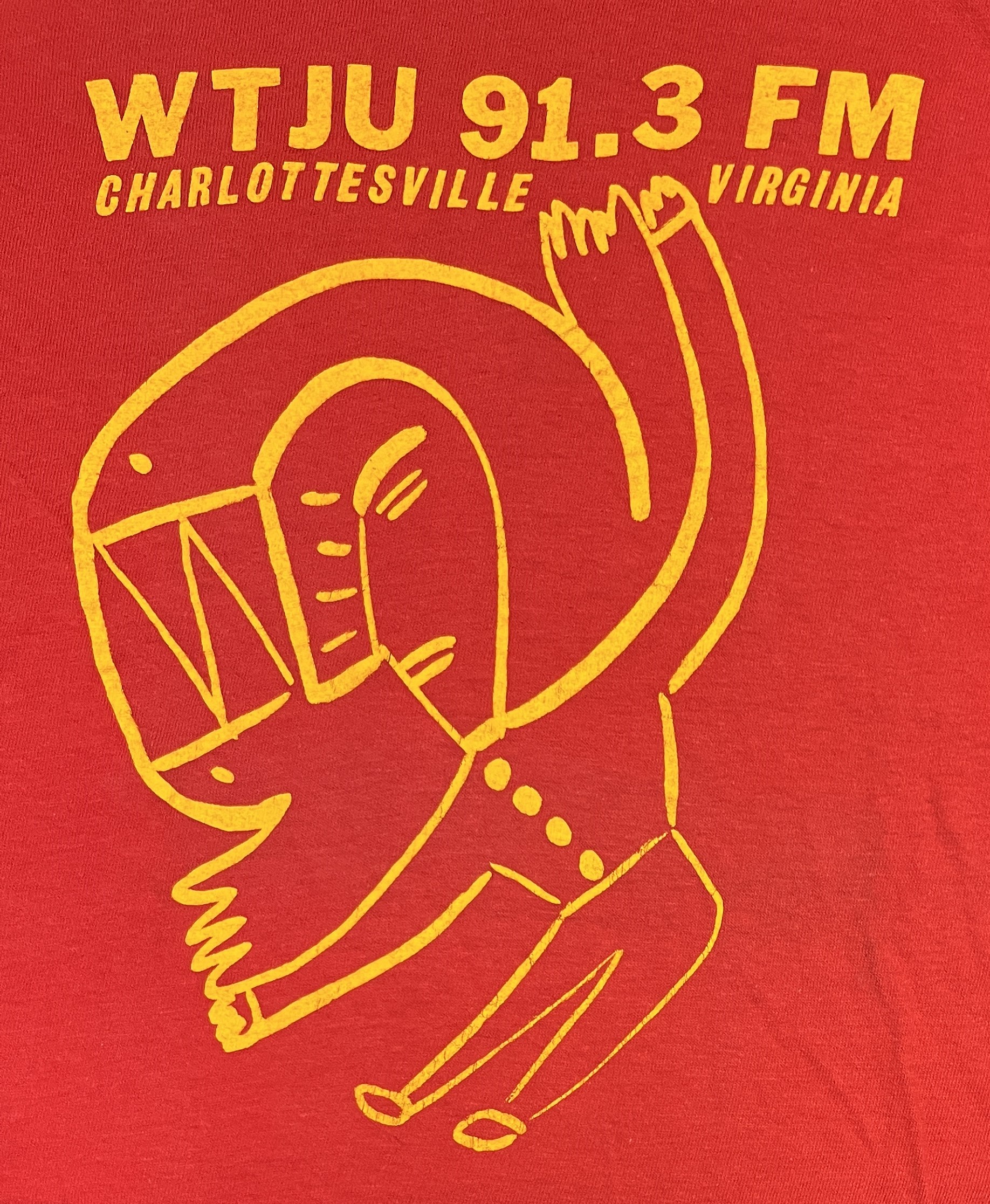
Sad Seal
pp
pp
pp2
pp2
pp2
pp